20,000 people
contributors per SEVA centre
Individuals from schools, corporates, and communities supported the transformation of paper waste into new notebooks, becoming active contributors to the circular economy.
Made@gain is a student-led circular economy initiative. We collect used paper from schools, offices and communities — and turn it into brand-new notebooks for children who have none. 20,000+ contributors. 10,000 students reached. 1,000 tribal children. The loop is working.
20,000 contributors across schools, corporates and communities have joined the movement
Individuals from every school, corporate and community who have contributed have become a node in the circular economy. Together they keep tonnes of paper out of landfill — and put brand-new notebooks in children's hands.
Individuals from schools, corporates, and communities supported the transformation of paper waste into new notebooks, becoming active contributors to the circular economy.
Schools, corporates, and communities participated in collection drives, contributing 20,000 kgs recyclable material and an additional ₹3.75 lakhs to support the circular economy.
Printed and distributed to students, including 1,000 tribal children who experienced the joy of owning a notebook for the very first time.
Think about your old notebooks from last year. What happened to them? In a linear economy — they were thrown away. In a circular economy — they become someone else's brand-new notebook. Made@gain closes the gap.
Unused notebooks, half-full exercise books, last year's textbooks. 80% of school paper waste is recyclable. Almost none of it is. The resource leaves the system at the moment it has the most life left.
Children in government and tribal schools have nothing to write in. Not because the paper doesn't exist. Because the loop between the child who has too much and the child who has nothing has never been closed. Until now. Including 1,000 tribal children now reached for the first time.
Most economies are linear — take, make, waste. A resource is used once and thrown away. The circular economy keeps resources in use, extracts maximum value, then recovers and regenerates. Made@gain is a circular economy in miniature.
Take. Make. Waste.
A notebook is made from virgin paper. A student uses it. At the end of the year it is thrown away. The resource is gone — the loop never closes.
Collect. Recycle. Distribute.
A notebook is used, collected, recycled through 7 steps, turned into a new notebook, and given to a child who needs it. The resource stays in the system — the loop closes.
Responsible Consumption & Production.
Made@gain directly advances UN SDG 12. Every child who receives a Made@gain notebook is already a contributor to SDG 12.
Simple for you. Life-changing for someone else. Here's the complete journey — from your collection box to a child's desk.
Old notebooks, textbooks and exercise books are gathered from schools, homes, offices and community drop-points. Every book that would otherwise be thrown out starts its second life here.
Books in good condition are kept whole and passed on directly. The rest are routed to recycling, where their paper begins a new life.
Plastic covers, metal spirals and adhesive bindings are removed so only clean paper continues into the recycling stream. Nothing goes to waste — non-paper materials are sent to specialist recyclers.
Cleaned pages enter an industrial shredder where they are cut into fine, uniform pieces. This breaks down the paper fibres so they can be pulped — and removes any remaining impurities.
The shredded paper is mixed with water and gently agitated until it becomes a smooth, homogenous pulp. This is the moment a stack of old notebooks becomes raw material for new ones.
The pulp is poured over fine screens that filter out any remaining contaminants. What passes through is a clean, even pulp — ready to be pressed into sheets of paper.
The refined pulp is pressed, dried and cut into new sheets. These sheets are bound into Made@gain notebooks — complete with our printed recycling story inside — and sent to children who need them.
At your school: Each school brings together around 1,000 contributors — students, parents and teachers — dropping their old notebooks and textbooks in the collection box.
At your office: Each corporate collection point brings in around 200 contributors. We collect, sort and recycle everything.
Drop Box (coming soon): We are working with delivery partners so you can send old stationery directly to us from anywhere.
Every piece of paper that enters the Made@gain system is accounted for. Books in good condition are redistributed directly. The rest go through a 7-step recycling process — shredded, pulped, cleaned, pressed and bound into brand-new notebooks. Nothing leaves the loop.
10,000 students — including 1,000 tribal children — have received recycled-paper notebooks. Every distribution is tracked, and every notebook carries the story of how waste was transformed into a valuable learning resource.
Made@gain is constantly designing products that add value. Here are some of our innovations built into every notebook.
Designed a bookmark that also works as a ruler — functional and zero-waste.
The back explains the recycling journey, so every child who receives a notebook understands the care behind it.
Scan to find out more about Made@gain, donate stationery, or become a school partner — right from the printed books.
Each notebook becomes a messenger of change, carrying stories and ideas that spread awareness about the circular economy far beyond the initiative itself.
The names of every contributor are printed on the back page, celebrating the collective effort behind each notebook.
Anyone can pledge — students, parents, teachers, professionals.
"I pledge to be part of the circular economy — to give the resources I use a second life, and to close the loop rather than add to the waste. I believe that small actions, taken together, change the system."
Everyone who has made the pledge
Your name will be the very first on the wall. Sign the pledge above to start the movement.
Every 40 contributors at ₹500 each fund a batch of 1,000 notebooks. All 40 names are printed on the back page of every notebook in the batch. When the pool is full, the batch goes to print.
0 of 40 spots filled · 40 remaining
Grade 9 students of a leading school in Bangalore included Made@gain as their official CBSE SEWA project.
Community service through meaningful action
Taking responsibility for sustainability
Collaborating towards a shared goal
Owning tasks, roles and real outcomes
Built-in documentation, real leadership, and measurable social impact. Reports submitted in Health & Physical Education (HPE). Assessment based on participation, effort, teamwork, and learning experience.
Student ambassadors designed posters, created an awareness video, and drafted initiative messages.
Student ambassadors visited classrooms to explain the initiative and inspire donations
Set up drop-off boxes, ran collection campaigns, and tracked stationery collected
Recorded books collected and compiled SEWA reports with photos and dates
A SEVA Centre is a school committed to the circular economy network, trained to collect recyclable paper and serve as a permanent collection hub.
Inspire your school to become a Made@gain SEVA centre — a permanent node in the circular economy. We train you, provide the collection bin, and connect your school's collection to the children who receive the notebooks your paper becomes.
Run a drive at your school and join the green initiative. What you get:
From students who donated to those who ran drives — here's the change in their own words.
Real moments from drives, classrooms and distribution days — the loop in motion. 7 moments captured
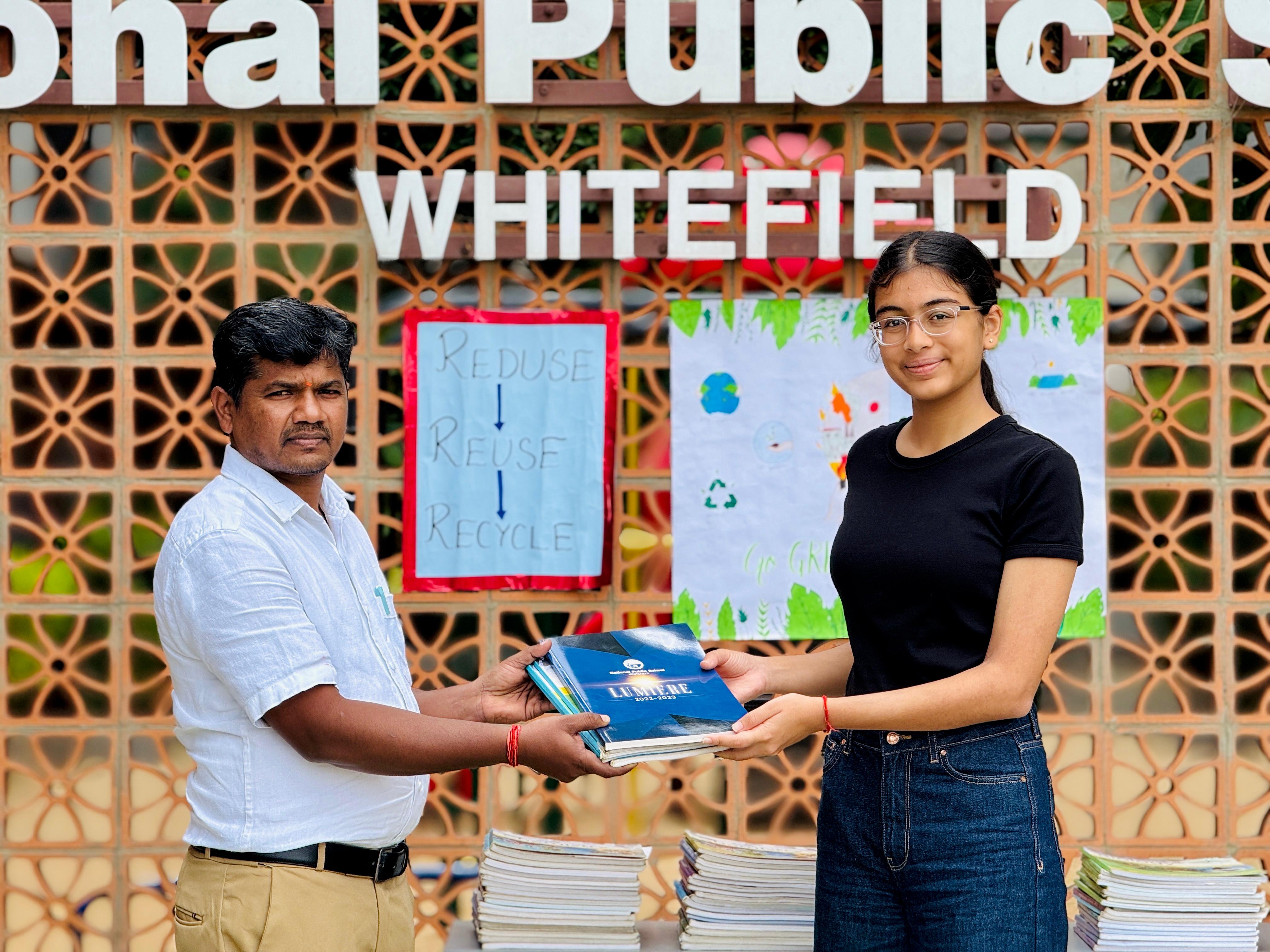
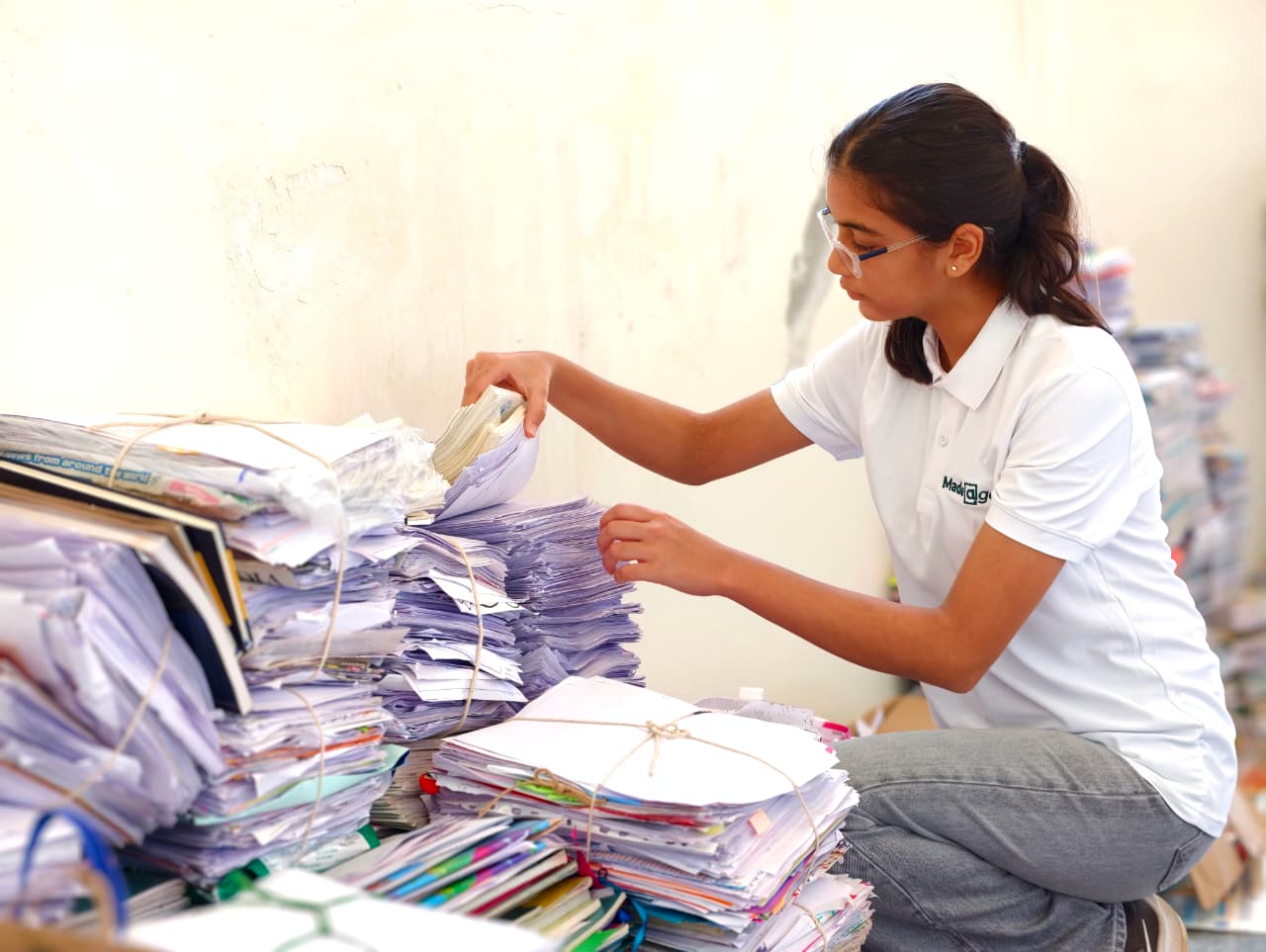
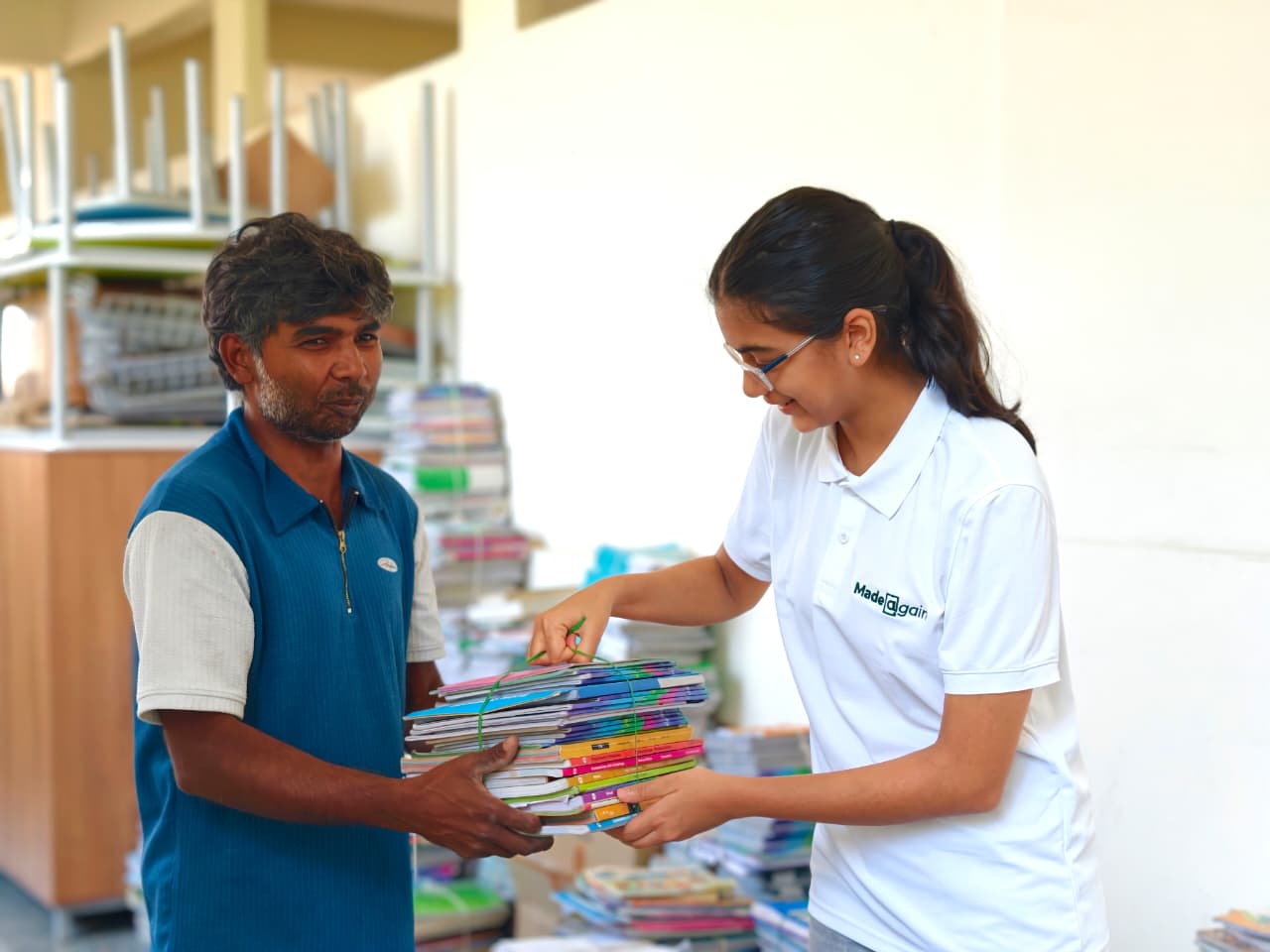
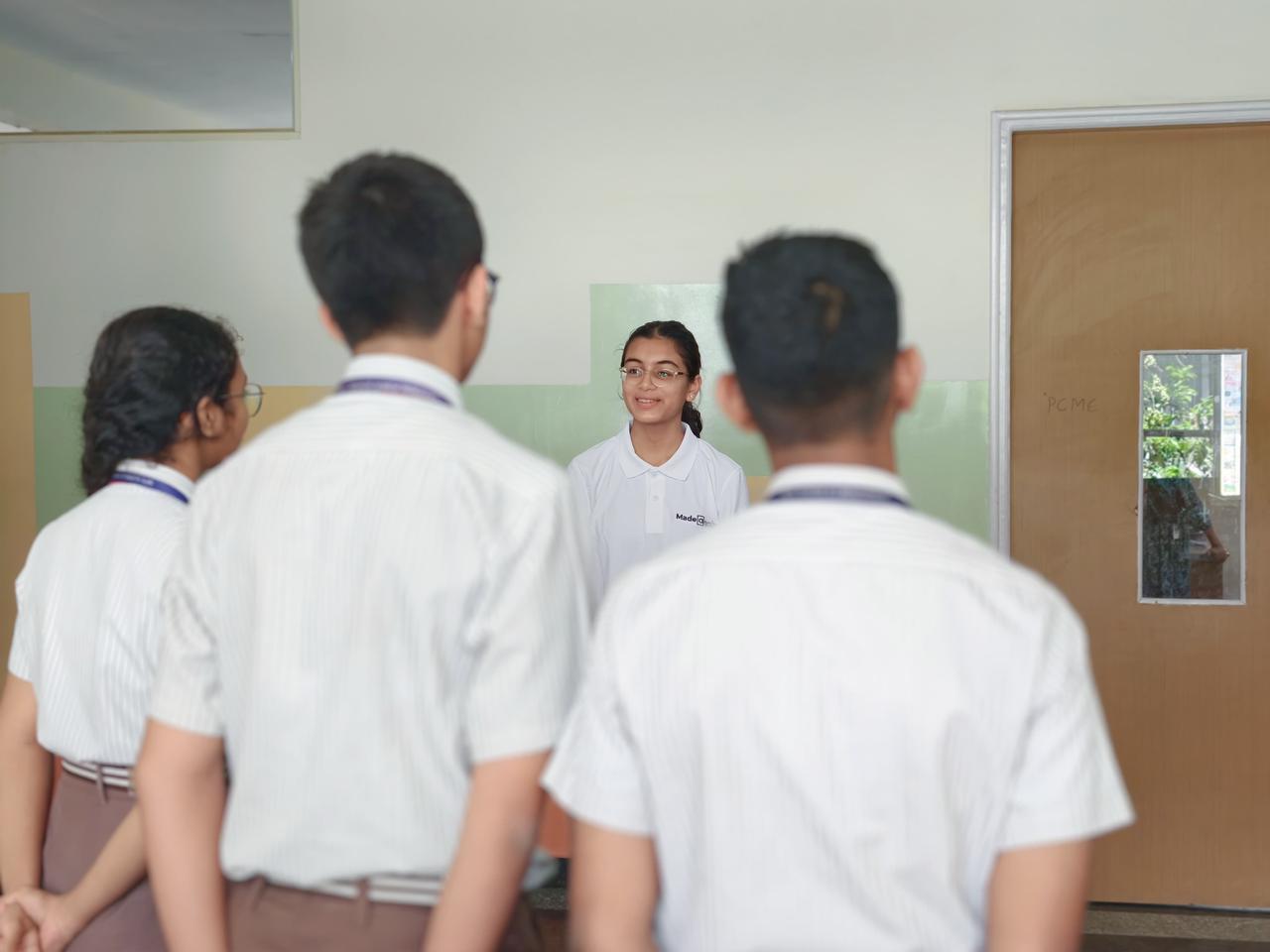
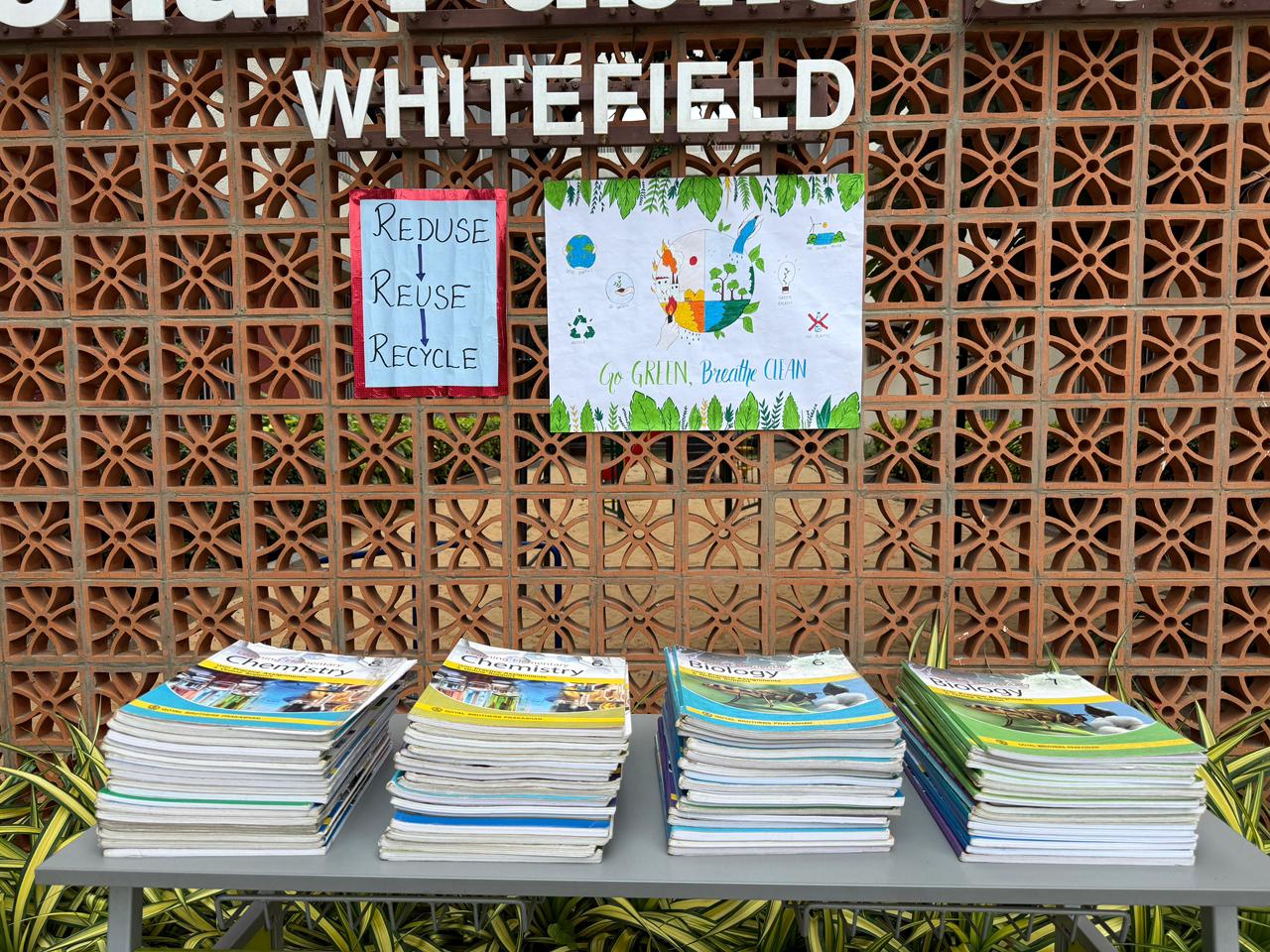
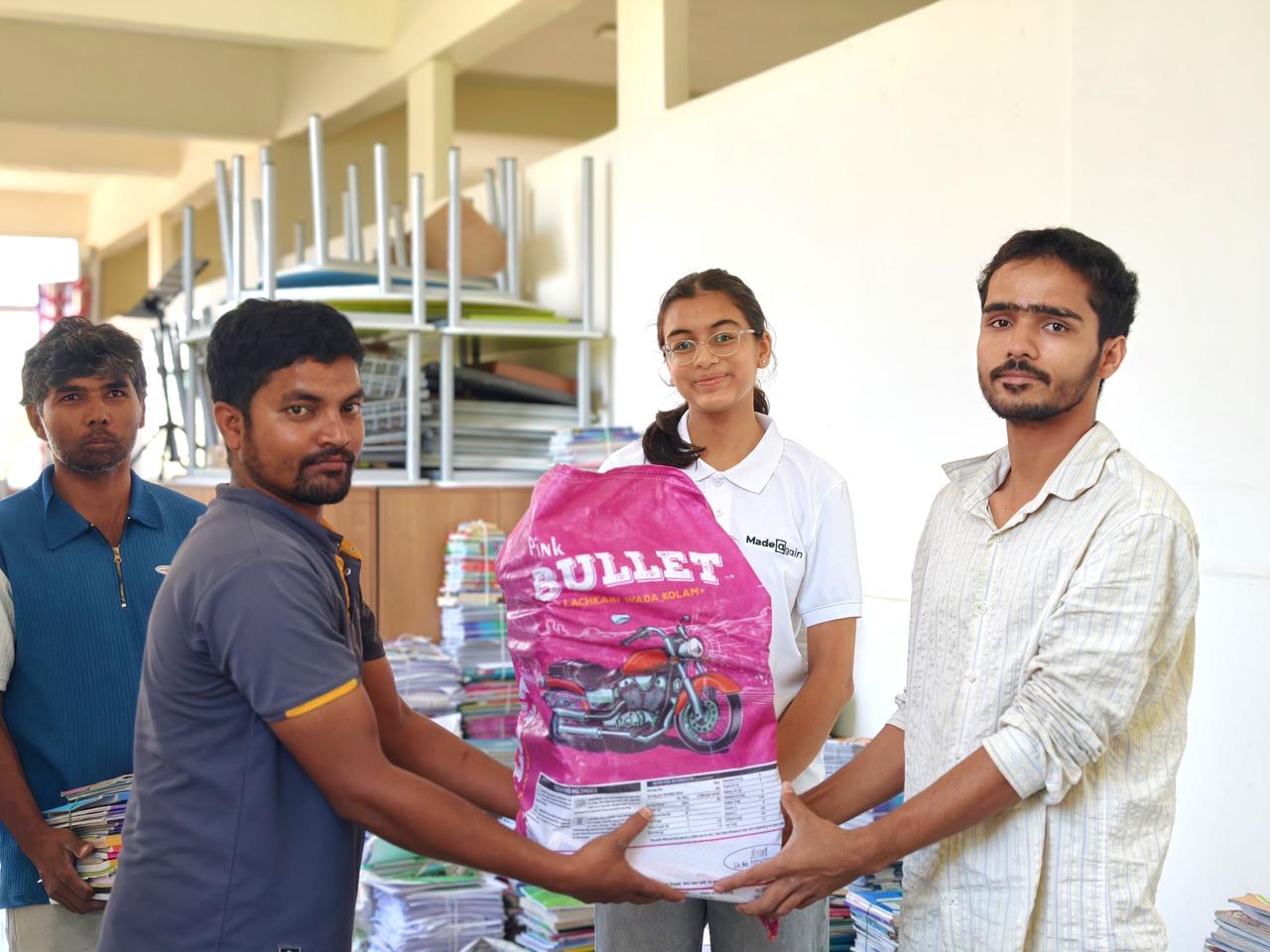
Schools, corporates and communities across Bangalore have come together. Every book donated travels through a 7-step recycling process before reaching a child who needs it.
Every book collected is recycled and distributed to children who need it most — in tribal schools, government schools and underserved communities across Karnataka.
Everything you need to know about pledging, partnering, and how Made@gain works.